Your kid’s birthday is in three weeks and you haven’t started planning. Or maybe you started planning two months ago — you created a Pinterest board with 47 pins, bookmarked five venues, and saved a recipe for a cake that requires fondant skills you don’t have. And now you’re frozen somewhere between an over-engineered dream party and absolute panic.
Both of these are classic ADHD responses to event planning. Either you can’t get started because the whole thing feels like an enormous, shapeless task, or you hyperfocus on the exciting parts (theme! decorations! aesthetic!) while ignoring the logistics that actually make the party happen.
There’s a middle ground. It’s simpler than you think.
Why Birthday Parties Break ADHD Brains
Party planning hits every ADHD weak spot at once. It requires planning weeks ahead (time blindness). It involves dozens of small tasks that need to happen in a specific sequence (executive function). It demands tracking RSVPs, orders, and supplies across multiple channels (working memory). And it carries emotional weight — you want your kid to feel special, which adds pressure on top of an already challenging task.
Most parents can hold a rough party plan in their head and execute it over a few weeks. ADHD parents either hold the whole thing in their head until it becomes an anxiety spiral, or they avoid thinking about it until it’s two days out and everything becomes an emergency.
Neither approach works. What works is externalizing the plan — getting it out of your head and into a system that shows you exactly what needs to happen each week.
The Brain Dump Saves the Party
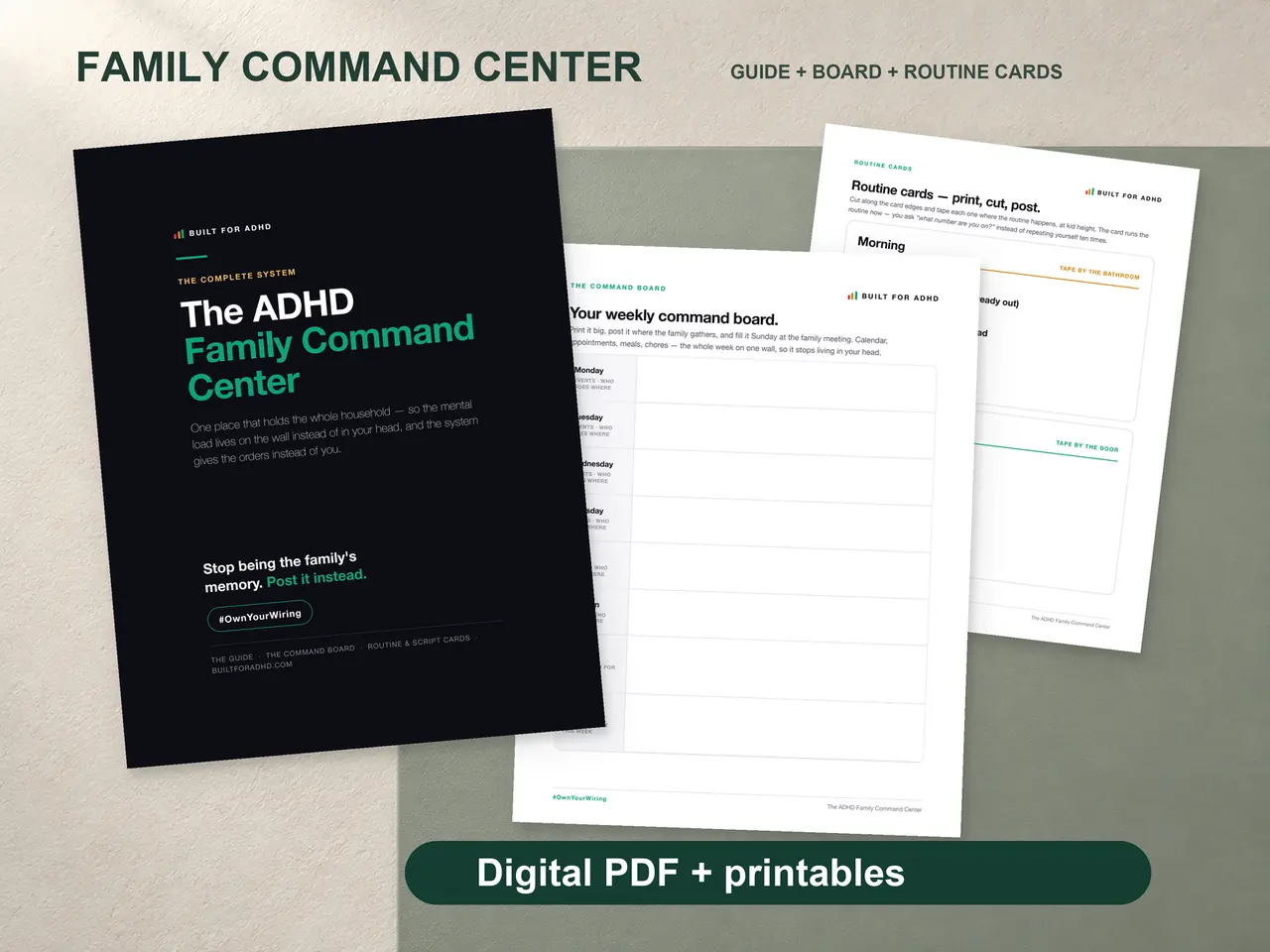
Before you plan anything, dump everything. Every idea, every worry, every Pinterest pin, every “I should” and “what if” goes onto the brain dump page.
You’ll probably find that you have a mix of genuinely important things (book venue, send invitations, order cake) and aspirational things (matching tableware, custom party favors, a balloon arch). Seeing them all together lets you sort what actually matters from what Instagram convinced you was necessary.
Here’s the truth about kids’ birthday parties: your child will remember three things. That their friends came. That there was cake. That they had fun. They will not remember whether the napkins matched the plates. They will not remember the font on the invitations. They will definitely not remember whether you used a professional balloon artist.
Circle the essentials. Let the rest go. Your brain just got permission to plan a smaller, more manageable party, and your kid will love it exactly the same.
Spreading the Work Across Weeks
Once you know what actually needs to happen, the weekly overview lets you place each task into the week and energy block where it fits. This is where ADHD brains actually shine — you’re not trying to do everything at once or remember everything until some vague future date. You’re putting specific tasks into specific time blocks.
Week one: make the big decisions. Theme, location, guest list, date. These are the choices that everything else depends on, and knocking them out early prevents the cascade of “I can’t do X until I decide Y” that stalls ADHD brains.
Week two: invitations and orders. Send out invitations (digital is fine and faster), order the cake or book the food, and confirm the venue. These are the tasks with external deadlines that other people depend on.
Week three: supplies and details. Pick up decorations, plan any games or activities, confirm the headcount. This is where the Kid Stuff section helps — you can track RSVPs per kid and see at a glance who’s confirmed and who needs a follow-up.
Week four: final prep. Last grocery run, set up what you can the night before, and accept that whatever isn’t done by now doesn’t need to be done.
The Overplanning Trap
ADHD brains love the planning phase of exciting projects. You might spend three hours researching themed party supplies when you could have just bought plates at the store. The dopamine from planning feels productive, but it’s actually stealing time from execution.
The weekly planner limits this by giving you a 15-minute planning window per week. That’s enough to check what’s coming up and slot tasks into energy blocks. It’s not enough to fall down a Pinterest rabbit hole. The constraint isn’t a punishment — it’s a guardrail that keeps your planning brain from eating your doing brain’s time.
When the Party Is Over
Here’s the part nobody talks about: the post-party crash. You spent weeks building toward an event, it happened, and now there’s a dopamine void. Dirty dishes, leftover cake, and that hollow feeling ADHD brains get when a project ends.
Give yourself permission to do absolutely nothing the next day. The weekly planner will be there when you’re ready to look at the next week. No guilt, no pressure to immediately catch up on everything you deferred during party planning.
You pulled off a birthday party with an ADHD brain. That’s a win. Write the thank-you notes when you write them, clean up when you clean up, and remember that your kid had a great day because you showed up — not because the party was perfect.