Planning a wedding is supposed to be exciting. And parts of it genuinely are. But if you have ADHD, the excitement sits right next to a specific kind of dread — the dread of managing a months-long project with hundreds of moving parts, dozens of deadlines, and decisions that never seem to stop.
You’ve probably already experienced the cycle. You sit down to plan, open Pinterest or a wedding checklist, get hit with 87 categories of things you need to decide on, and then close your laptop feeling worse than when you started. Or you hyperfocus for four hours on centerpieces while forgetting to call the caterer back. Neither mode is productive, and both leave you feeling like you’re failing at something that’s supposed to be joyful.
You’re not failing. You’re trying to manage a project manager’s workload without a project manager’s brain. The fix isn’t trying harder. It’s building the structure your brain won’t create on its own.
Why Wedding Planning Breaks ADHD Brains
A wedding is not one task. It’s a constellation of interconnected tasks with different deadlines, different levels of urgency, and different emotional weights. Book the venue (high urgency, high stress). Choose napkin colors (low urgency, somehow still stressful). Confirm guest dietary restrictions (medium urgency, requires emailing forty people and following up with the twelve who never respond).
ADHD brains can’t hold all of this simultaneously. Working memory caps out fast, and when it does, everything blurs into a single mass of “wedding stuff I need to deal with.” That mass is too big to act on, so you either avoid it entirely or dive into the one detail that happens to interest you while critical deadlines slip.
The emotional dimension makes it worse. This isn’t a work project where you can phone it in and nobody notices. This is your wedding. The stakes feel enormous, which increases anxiety, which worsens executive dysfunction, which causes avoidance, which increases anxiety. Another loop with no natural exit.
Reverse-Engineering the Big Day
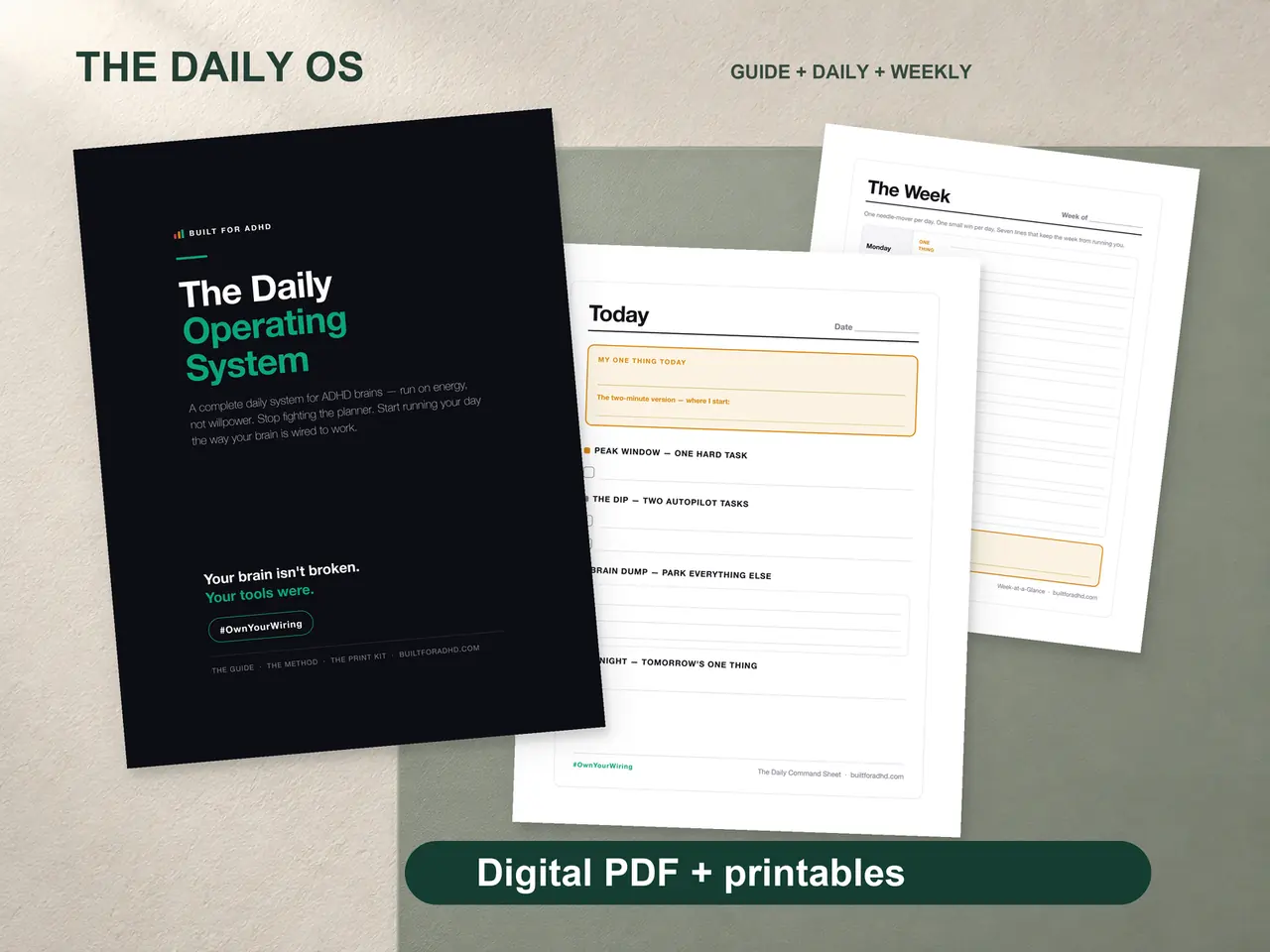
The Daily OS treats your wedding date like any other deadline — you work backwards. Write the date at the top, list your major milestones (venue booking, catering, invitations, fittings, rehearsal), and map them across your available time, one page at a time.
But here’s what makes it work for ADHD specifically. You don’t see the full twelve-month plan. You see today. Just today. One to three wedding-related tasks alongside whatever else you have going on. “Call three florists and get quotes.” “Confirm reception start time with venue.” “Mail thank-you cards to early gift-givers.”
Each task is specific enough to start without any additional planning. There’s no “work on wedding stuff” on the list. Every item has a clear verb and a clear completion point. You know when you’ve done it because the task itself tells you.
Buffer Days Save Relationships
This needs its own section because it’s that important. Wedding planning with ADHD will include days where you cannot touch any of it. Days where executive function is offline. Days where the emotional weight of the event makes every task feel like a threat. Days where you need to just be a human being and not a wedding coordinator.
Buffer days are built into the planner specifically for this. They’re not bonus days for getting ahead. They’re structural support that keeps the timeline intact when your brain takes an unscheduled day off. When you miss a day, the system absorbs it. No cascading delays. No guilt about falling behind.
This also matters for your relationship. Wedding planning stress is a leading cause of pre-wedding conflict, and ADHD amplifies that stress. When one partner has ADHD and the other doesn’t, the non-ADHD partner often ends up carrying the planning load and building resentment. A structured planner you both can see — pin the pages on the fridge — reduces that dynamic: both partners can see what’s been done, what’s coming up, and what today requires.
Watching Progress Build
The Done Tracker transforms wedding planning from an endless grind into a visible journey. Every completed task lets you shade in another segment of the progress bar. Every milestone — venue booked, invitations sent, RSVP deadline passed — is one you mark off by hand as a win.
This is more than a feel-good feature. For ADHD brains, long-term projects feel like they’re going nowhere. You’ve been planning for five months and the wedding still isn’t here, so it feels like you haven’t accomplished anything. The progress bar proves otherwise. You can see how much you’ve already shaded in. You can see the milestones you’ve already crossed. That visual evidence keeps motivation alive across a timeline that would otherwise feel infinite.
Your Wedding, Your Way
Wedding planning advice usually assumes a neurotypical brain — someone who can naturally maintain a mental timeline, prioritize intuitively, and sustain attention on administrative tasks for months. That’s not you, and there’s no reason to pretend it is.
The planner doesn’t ask you to become someone else for the next year. It gives your actual brain — the one that needs structure, specificity, buffer days, and dopamine feedback — exactly what it needs to pull off something genuinely beautiful. Without the meltdown.