It’s 7:38 AM. School starts at 8:10. One kid is dressed but has no shoes. The other is still eating breakfast in their pajamas. You can’t find the permission slip that was definitely on the counter last night. And you’re simultaneously making lunches, locating a missing sock, and trying not to raise your voice because you promised yourself you wouldn’t start the day yelling again.
This is not a bad morning. This is a Tuesday.
Why Every School Morning Feels Like an Emergency
ADHD mornings fail for one core reason: they require sequential execution under a time constraint, and those are the two things ADHD brains struggle with most.
Your child knows they need to get dressed, eat breakfast, brush their teeth, and grab their backpack. But without external structure, those steps don’t exist in a sequence — they exist in a floating cloud of “stuff I need to do” with no clear order and no sense of how long any of it takes.
Meanwhile, you’re trying to manage your own morning routine while simultaneously being the executive function for one or more small humans. You’re the project manager, the timekeeper, the motivator, and the last line of defense against everyone leaving the house without pants.
Anchor Steps, Not Twenty-Step Checklists
A common mistake is creating an elaborate morning checklist with fifteen items on it. Wake up. Make bed. Get dressed. Pick out socks. Put on socks. Brush teeth. Use mouthwash. Comb hair. The more steps, the more chances for distraction and the more reminding you have to do.
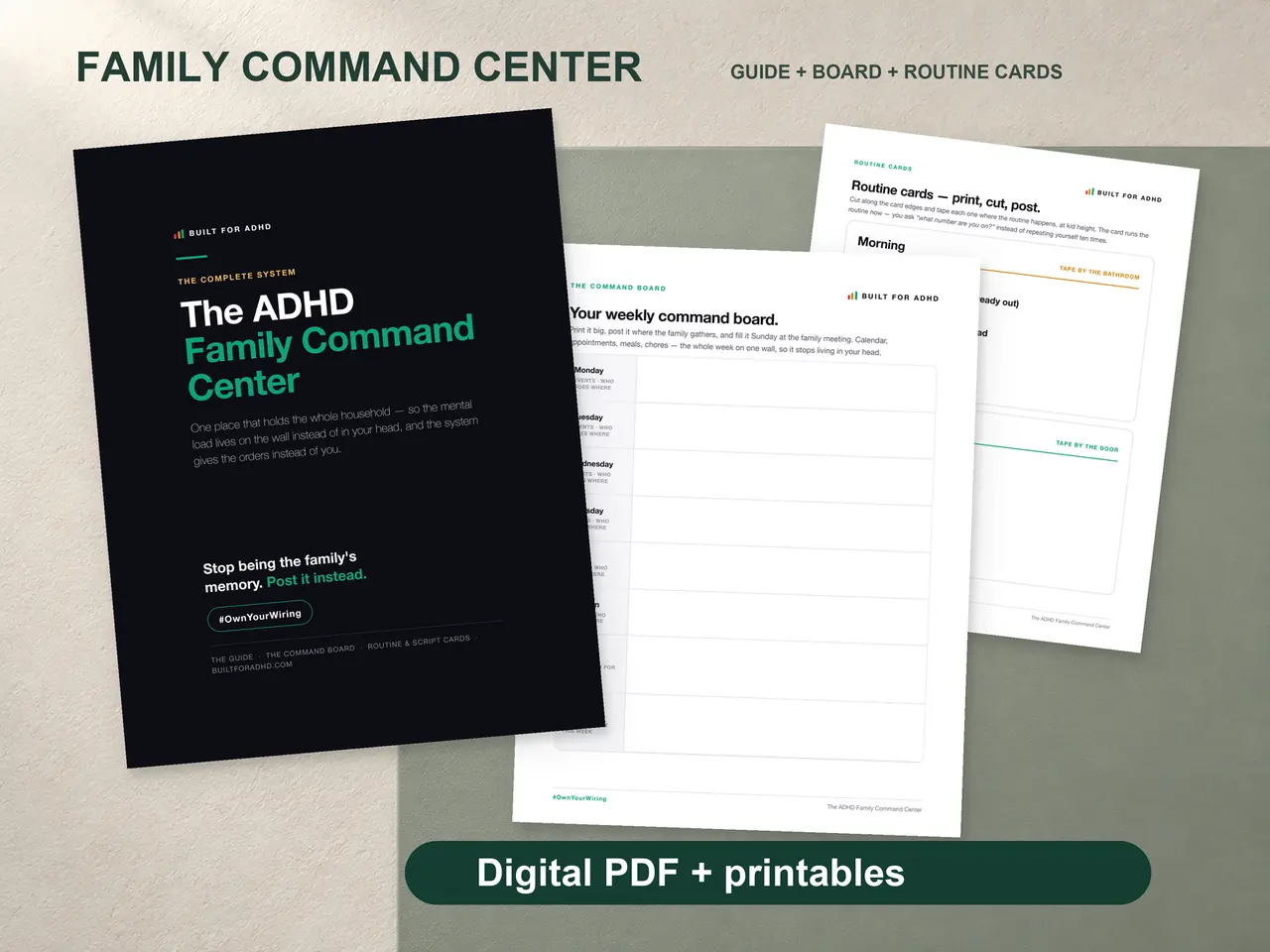
Instead, use four or five anchor steps. These are the non-negotiable actions that get a kid from bed to backpack. Everything else is optional or gets absorbed into the anchors.
A solid anchor sequence looks like this: get dressed, eat, teeth, shoes, backpack. Five steps. That’s it. The kid knows exactly what’s next at every point, and you’re not narrating a twenty-step process while also trying to pour coffee.
The Night-Before Setup That Saves Mornings
The best school morning actually starts the night before. Five minutes of evening prep eliminates half the morning chaos.
Clothes picked out and set by the bed. Backpack packed and by the door. Lunch boxes on the counter ready to fill. A quick glance at the weekly planner’s Kid Stuff section to check for special items — library book on Tuesdays, gym shoes on Thursdays, that permission slip that’s been on the counter for a week.
This works because evening brain has more bandwidth than morning brain. You’re not fighting the clock yet. You can think ahead without the pressure of a bus pulling up in twelve minutes.
Buffer Time Is Not Optional
If you need to leave at 7:50, you should be aiming for 7:40. That ten-minute buffer is the difference between a calm exit and a screaming one.
ADHD brains consistently underestimate how long things take. Getting shoes on takes three minutes, not thirty seconds. Finding the water bottle takes five minutes if it’s not in its spot. The buffer absorbs these realities without derailing the whole morning.
Build the buffer into your routine and protect it. It’s not wasted time. It’s the time that keeps everyone’s nervous system intact.
Your Morning Matters Too
Here’s what gets lost in the school morning chaos: you are also a person who needs to start their day.
Did you eat? Did you take your meds? Did you have even sixty seconds that weren’t spent managing someone else’s needs? The Self-Care Tracker in the planner exists because ADHD moms routinely skip their own basics while making sure everyone else is taken care of.
If you can get up twenty minutes before the kids, use that time for yourself. Coffee, meds, a quick brain dump of whatever’s swirling in your head. You don’t need an elaborate morning routine — you need enough of a start that you’re not running on empty by 8 AM.
When Mornings Still Go Sideways
Some mornings will be terrible. Someone will have a meltdown. You’ll forget the library book anyway. You’ll arrive at school three minutes late and feel the weight of every car in the drop-off line behind you.
That’s not a failure of the system. That’s a Tuesday with kids. The morning routine template doesn’t promise perfection — it promises that most mornings will be calmer than they are right now. And the ones that aren’t will reset tomorrow, with no judgment and no streak to break.
Progress is three good mornings out of five, not five out of five. Lower the bar to where you can actually reach it, and then watch how good it feels to clear it consistently.