“I need this.” You’ve said it a thousand times. About the ergonomic pillow. About the third set of wireless earbuds. About the meal prep containers that are still in their packaging three months later. In the moment, every single one of those felt like a genuine need.
That’s not you being dramatic. That’s your ADHD brain’s inability to assign different priority levels to different desires. When your brain wants something, it labels it “urgent and necessary” regardless of whether it actually is. You’re not bad at decisions — your brain’s urgency signals are miscalibrated.
The ADHD Want-Need Blur
In a neurotypical brain, wants and needs occupy different lanes. Needs feel steady and persistent — you need groceries, you need to pay your electric bill, you need winter boots when yours have holes in them. Wants feel lighter, more optional, easier to set aside.
In an ADHD brain, that separation barely exists. Your dopamine system doesn’t differentiate between “I need new tires for my car” and “I need that limited edition color of a product I already own.” Both register as urgent. Both feel essential. Both create the same pressure to act immediately.
This is why the standard advice of “just ask yourself if you really need it” falls flat. Your brain’s answer is always yes. It genuinely believes it. The signal it sends you is indistinguishable from a real need, because the neurochemistry is the same.
Why You Can’t Trust the Feeling
When you see something you want, your brain produces a specific cocktail of chemicals. Dopamine fires for the anticipation. Norepinephrine sharpens your focus on the object. Your emotional brain starts building a story about why this thing will improve your life.
All of this happens before your rational brain even gets involved. By the time you’re consciously thinking about whether to buy something, your brain has already decided yes and is just looking for justification.
This is why relying on your internal sense of “need” doesn’t work for ADHD purchases. You need an external framework — something outside your brain that asks the right questions and gives you an honest assessment.
The 60-Second Want vs Need Check
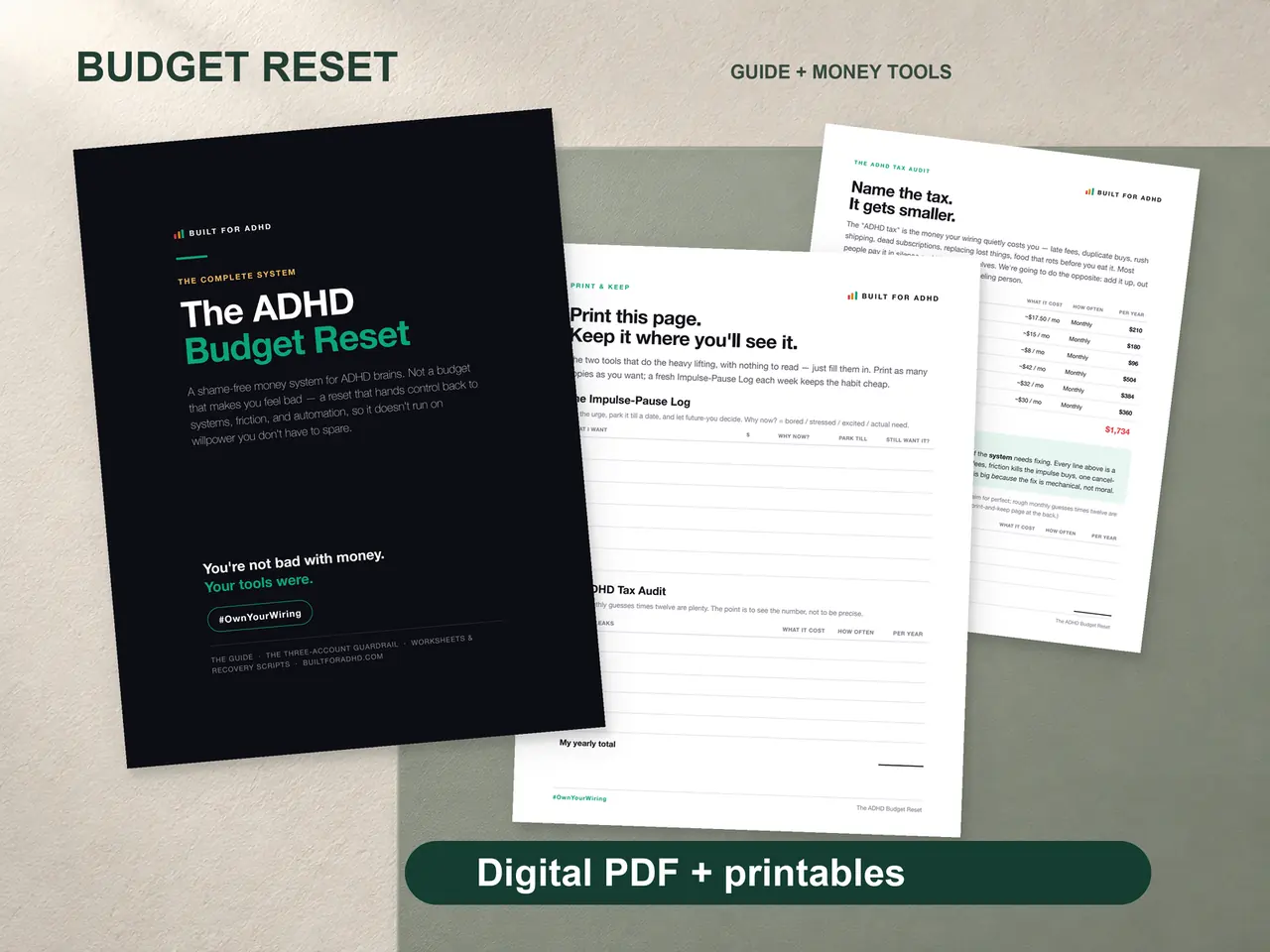
The Budget Reset puts four specific questions between your impulse and your wallet. These questions aren’t asking how you feel about the purchase. They’re asking for facts.
Did you know you needed this before you saw it? If the answer is no, there’s a strong chance your brain just invented the need on the spot. Real needs exist before you encounter the product that fills them.
Would you drive across town specifically to buy this? This question tests the strength of the want. If you’d make a dedicated trip for it, the desire has some substance. If the answer is “well, no, but since I’m already here…” that’s your brain trying to lower the bar.
Will you still care about this in a week? ADHD brains cycle through interests fast. The thing that feels essential right now might be completely irrelevant by Friday. If you’re being honest, you probably know which purchases have staying power and which don’t.
These questions work because they don’t ask your brain to evaluate urgency — they route around the urgency signal entirely. They ask for behavioral evidence instead of emotional assessment.
The Color-Coded Answer
After the four questions, you get a clear pause score. Green means your purchase passes the test — buy it without the guilt spiral. Yellow means it’s ambiguous — put it on a 48-hour wait and see if you still want it. Red means your brain is pulling its usual trick of dressing up a want in need’s clothing.
That green score matters. One of the worst side effects of ADHD spending guilt is that you start doubting every purchase, even legitimate ones. A framework that can confirm “yes, this is a real need, go ahead” is just as important as one that catches impulse buys.
Phone-Friendly, Because That’s Where It Happens
The template is designed to live on your phone. Screenshot it, save it to your favorites, pin it somewhere accessible. Because the purchases you need to catch are happening on your phone — in the Amazon app, on Instagram shops, on whatever site your browser opened while you were “just looking.”
The moment you feel that “I need this” surge, pull up the template. Sixty seconds. Four questions. A clear answer. That’s all the time your brain needs to tell the difference between what you want and what you need — even when both feel identical.