It’s 5:17 PM. You’re standing in front of the open refrigerator, staring at ingredients that don’t seem to go together, while someone behind you asks what’s for dinner. You bought groceries two days ago with a plan. The plan is gone. The chicken might be expired. And the energy to figure any of this out left your body about three hours ago.
If this is your Tuesday — and your Thursday, and most of your Saturdays — you’re not bad at feeding your family. You’re fighting a system that wasn’t designed for your brain.
Why Meal Planning Is an ADHD Nightmare
Meal planning sits at the intersection of every executive function challenge ADHD throws at you. You need to decide what to eat, which requires generating options from thin air. You need to remember what’s already in the fridge. You need to sequence a grocery list. You need to time the cooking so everything is ready at once. And you need to initiate all of this during the lowest-energy part of your day.
It’s not one task. It’s seven tasks stacked on top of each other wearing a trench coat pretending to be one task. No wonder it feels impossible.
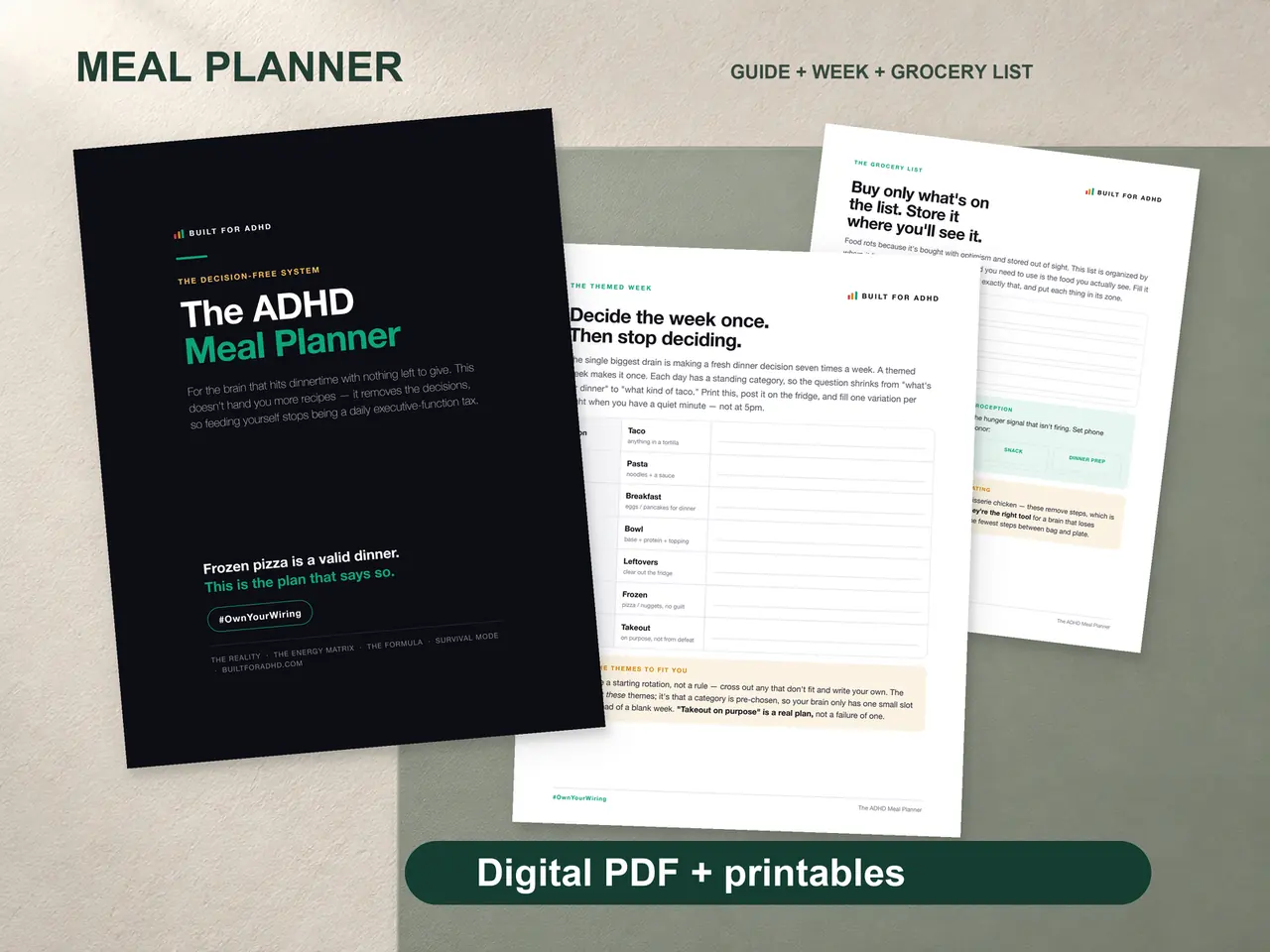
The Favorites Bank: Your Secret Weapon
Here’s the single most effective change you can make to your meal planning: stop trying to come up with new ideas.
Build a favorites bank. This is a simple list of meals your family actually eats. Not aspirational Pinterest recipes. Not the healthy dinners you swear you’ll start making. The actual meals that get consumed without a fight.
Spaghetti. Tacos. Chicken nuggets and broccoli. Breakfast for dinner. Whatever your family’s rotation looks like — that’s your bank.
When it’s time to plan the week, you pick from the bank. That’s it. You’re not deciding what to make. You’re choosing from pre-approved options. The cognitive load drops dramatically because choosing is always easier than creating.
Five Ingredients or Less Is the Rule
Every meal in your favorites bank should follow one rule: five ingredients or less, not counting oil, salt, and pepper. This isn’t about gourmet cooking. This is about feeding people with the least amount of friction possible.
Five ingredients means a short grocery list. A short grocery list means less time in the store. Less time in the store means fewer impulse buys and less sensory overwhelm. The whole chain gets easier when you simplify at the source.
And here’s what nobody tells you: simple meals are what most families prefer anyway. Kids don’t want your elaborate stir-fry. They want the pasta they had last week, again, with exactly the same sauce.
Plan the Meals During Your Weekly Ritual
The ADHD Home Manager includes a fifteen-minute weekly planning ritual. Meals are one piece of it. You glance at the week ahead, check how many nights you’ll realistically cook, and fill meals from your favorites bank into those slots.
Some weeks that’s five nights. Some weeks it’s two, with takeout and leftovers filling the gaps. Both are valid. The plan reflects your actual life, not an idealized version of it.
This takes about three minutes of your fifteen-minute ritual. Three minutes to eliminate five days of “what’s for dinner” panic. That’s a trade worth making.
The Grocery List Writes Itself
When your meals are pulled from a favorites bank of simple recipes, your grocery list becomes almost automatic. You know exactly what goes into Tuesday’s tacos and Thursday’s pasta. You’re not wandering the store hoping for inspiration. You’re in, you’re out, you’re done.
If grocery shopping itself is an ADHD struggle — and it usually is — keep the list on your phone so you can’t forget it at home. Sort it by store section so you’re not zigzagging through aisles. And give yourself permission to do grocery pickup instead. The three-dollar fee is worth your sanity.
Let Go of the Guilt
You’re going to order pizza sometimes. You’re going to forget to defrost the chicken. You’re going to feed your kids cereal for dinner at least once a month, and they’re going to love it.
None of that makes you a bad parent. The expectation that every meal should be home-cooked, nutritionally balanced, and made with love is a standard that most people can’t meet consistently, and it’s especially brutal for ADHD brains that are already running on fumes by dinnertime.
A meal plan that works three nights a week is better than a perfect plan that works zero nights. Lower the bar, meet it, and give yourself credit. Your family is fed, and you showed up. That counts for everything.
The goal isn’t perfection. The goal is making 5 PM less terrifying. And a favorites bank with five-ingredient meals gets you there without requiring a single Pinterest board.