Let’s skip the part where we pretend this is just about “liking to shop.” You know it’s more than that. The packages keep arriving. The credit card balance keeps climbing. And every time you tell yourself “this is the last one,” your brain finds another thing that feels absolutely essential.
If you have ADHD, this pattern isn’t random. It’s wired into your neurology. And understanding that is the first step toward actually changing it.
The ADHD Shopping Cycle Nobody Talks About
Here’s what’s really happening in your brain when you shop compulsively:
Your baseline dopamine is lower than a neurotypical brain. That means you’re walking around with a constant, low-grade need for stimulation. Shopping checks every box your dopamine system is looking for — novelty (new things), anticipation (waiting for delivery), decision-making (comparing options), and reward (the purchase itself).
The problem is that the dopamine hit from buying something lasts about five minutes. Then you’re back to baseline. So you look for the next thing. And the next. And the next.
This isn’t a willpower problem. This is your brain’s reward system running the show while your executive function sits in the back seat.
Why “Just Stop Shopping” Doesn’t Work
You’ve tried it. You’ve deleted apps, cut up cards, told yourself you’re done. And it works for maybe three days before you find a workaround, because your brain is incredibly creative when it wants dopamine.
The issue with cold-turkey approaches is that they don’t replace the dopamine source. You’re taking away the thing your brain is using to regulate itself without offering an alternative. That’s like removing someone’s crutches without fixing their broken leg.
What actually works is creating friction between the impulse and the action. Not eliminating shopping — just slowing it down enough for your logical brain to participate in the decision.
Tools That Actually Work for ADHD Shopping Patterns
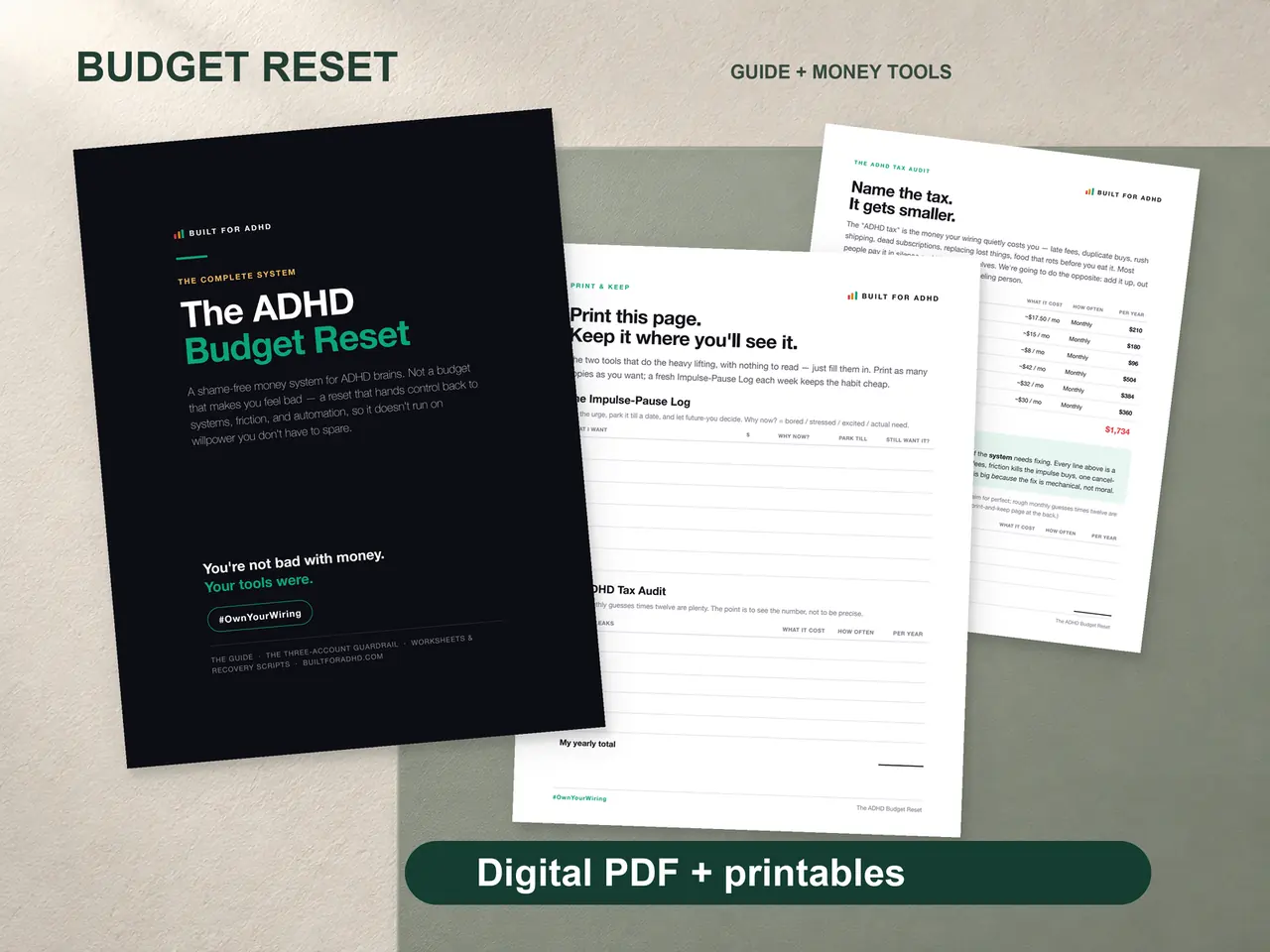
The Budget Reset is built around this exact principle. It’s not about restriction. It’s about insertion — putting a 60-second structured pause between “I want this” and “I bought this.” It’s an instant-download PDF you keep on your phone or print for your wallet — no app, no login, yours forever.
The 4-question decision framework is designed to be fast enough that your ADHD brain won’t rebel against it. You’re not filling out a spreadsheet or doing a full budget review. You’re answering four honest questions and getting a color-coded score.
Red means your brain is definitely chasing dopamine. Yellow means it might be a real want — wait 48 hours and find out. Green means this is a legitimate purchase and you can feel good about it.
That green score matters more than you think. One of the worst parts of ADHD shopping problems is that you start feeling guilty about everything you buy, even the things you genuinely need. A tool that can tell you “this one’s fine” is just as valuable as one that catches the impulse buys.
Building Your Evidence File
The savings tracker is where this gets powerful. Every time you pause and decide not to buy something, you write that dollar amount down. Over weeks and months, you build a clear picture of how much money your impulse brain was trying to spend.
This isn’t about shaming yourself. It’s about building evidence. Evidence that your system works. Evidence that you can interrupt the pattern. Evidence that the urge passes — because it always passes.
For ADHD brains, external evidence is everything. You can’t always trust your internal sense of progress because your brain’s memory and self-assessment are unreliable. But a running total of money saved? That’s concrete. That’s real. That’s proof you’re changing.
A Note About Shame
If you’re reading this page, you’ve probably spent a lot of time feeling terrible about your spending. Let’s put that down right now.
You didn’t choose how your brain produces dopamine. You didn’t choose to have impulse control differences. And the fact that you’re here, looking for tools to help, means you’re already doing more than most people ever will.
The goal isn’t to become someone who never buys anything. The goal is to build a system where your purchases reflect your actual values and priorities — not your brain’s moment-to-moment dopamine demands.
Start with the 60-second pause. That’s it. One small intervention in one moment. The rest builds from there.