Freelancing with ADHD is a paradox. Your brain chose freelancing because it hates structure, routine, and being told what to do. But successful freelancing demands structure, routine, and self-discipline — especially with money.
You know the cycle. A big payment lands and your brain screams celebration. You spend freely because you earned it, because the scarcity of last month is finally over, because your brain physically cannot resist the dopamine of a flush bank account. Two weeks later, the next payment hasn’t arrived yet and you’re rationing groceries, wondering how this happened again.
This feast-or-famine pattern isn’t a budgeting failure. It’s the ADHD brain’s inability to perceive future time as real. When money is in your account, it feels infinite. When it’s gone, the next payment feels impossibly far away. Both feelings are lies your brain tells with absolute conviction.
The Three Freelancer ADHD Money Traps
Trap 1: Feast-or-famine spending. Variable income triggers variable behavior. Big month? Expensive dinner, new equipment, that online course you’ll totally finish. Lean month? Panic, guilt, and ramen. This emotional rollercoaster with money makes consistent budgeting feel impossible.
Trap 2: The tax time bomb. You know you’re supposed to save for taxes. You’ve known this for years. But every time a payment arrives, the tax portion feels like it belongs to you — and your impulse control isn’t strong enough to wall it off. Come April, you owe thousands you don’t have, and the payment plan adds interest on top of the bill.
Trap 3: Invisible business expenses. That software subscription is tax-deductible. So is the portion of your internet bill you use for work. And your home office. But tracking these requires consistent logging throughout the year, and your ADHD brain treats anything that isn’t urgent right now as optional. So you miss deductions, overpay taxes, or panic-assemble records the night before your filing deadline.
All three traps get easier when business and personal money physically sit apart — the tax portion cannot feel like yours if it is not in the account you spend from, and expenses stop being invisible when one card pays for all of them. That layout is its own job: the four-account setup for separating business and personal money.
Four Moves for Freelancer Financial Stability
1. Create a baseline budget from your worst month. Look at the last six months. Find your lowest income month. That’s your baseline — the amount you budget around, no matter what. When you earn above baseline (which should be most months), the excess goes into a buffer account. When you earn below baseline, the buffer covers the gap. This turns variable income into something that feels stable.
2. Separate your money the moment it arrives. When a client pays you, immediately move 25-30% to a dedicated tax account. Then fund your baseline budget. Whatever remains goes to the buffer. This three-way split should happen within minutes of receiving payment — before your brain finds reasons to spend it.
3. Log expenses at the point of purchase. Not later. Not at the end of the week. Now. The Money Dump method makes this take under 10 seconds — just the amount and what it was for. If it was a business expense, mark it with a “B.” That’s it. Your future self during tax season will send you a thank-you card.
4. Review monthly with a one-page view. One session per month, 15 minutes, looking at a single printed page instead of a wall of spreadsheet rows. Are you on track for the month? Is your buffer growing or shrinking? What’s your ADHD Tax — the money lost to late fees, impulse purchases, and forgotten subscriptions? Make this a quick scan, not an accounting exercise.
The Invoice Timing Problem
Here’s a freelancer-specific ADHD challenge: you finished the work three weeks ago but haven’t sent the invoice. Your brain got the dopamine from completing the project. The invoice is an administrative afterthought — boring, non-urgent, easily postponed. Meanwhile, you’re not getting paid for work you already did.
Build invoicing into your project completion ritual. The project isn’t done when the deliverable is sent — it’s done when the invoice is sent. Make it the final step, not a separate task. If your brain still resists, set a phone alarm for every Friday at 2 PM: “Send any unsent invoices.” Make it stupidly specific.
If this is the one that keeps costing you real money, the billing day fix for ADHD invoicing goes further — a two-column tracker and a standing billing day, so getting paid stops depending on you remembering to.
A Budget That Handles the Chaos
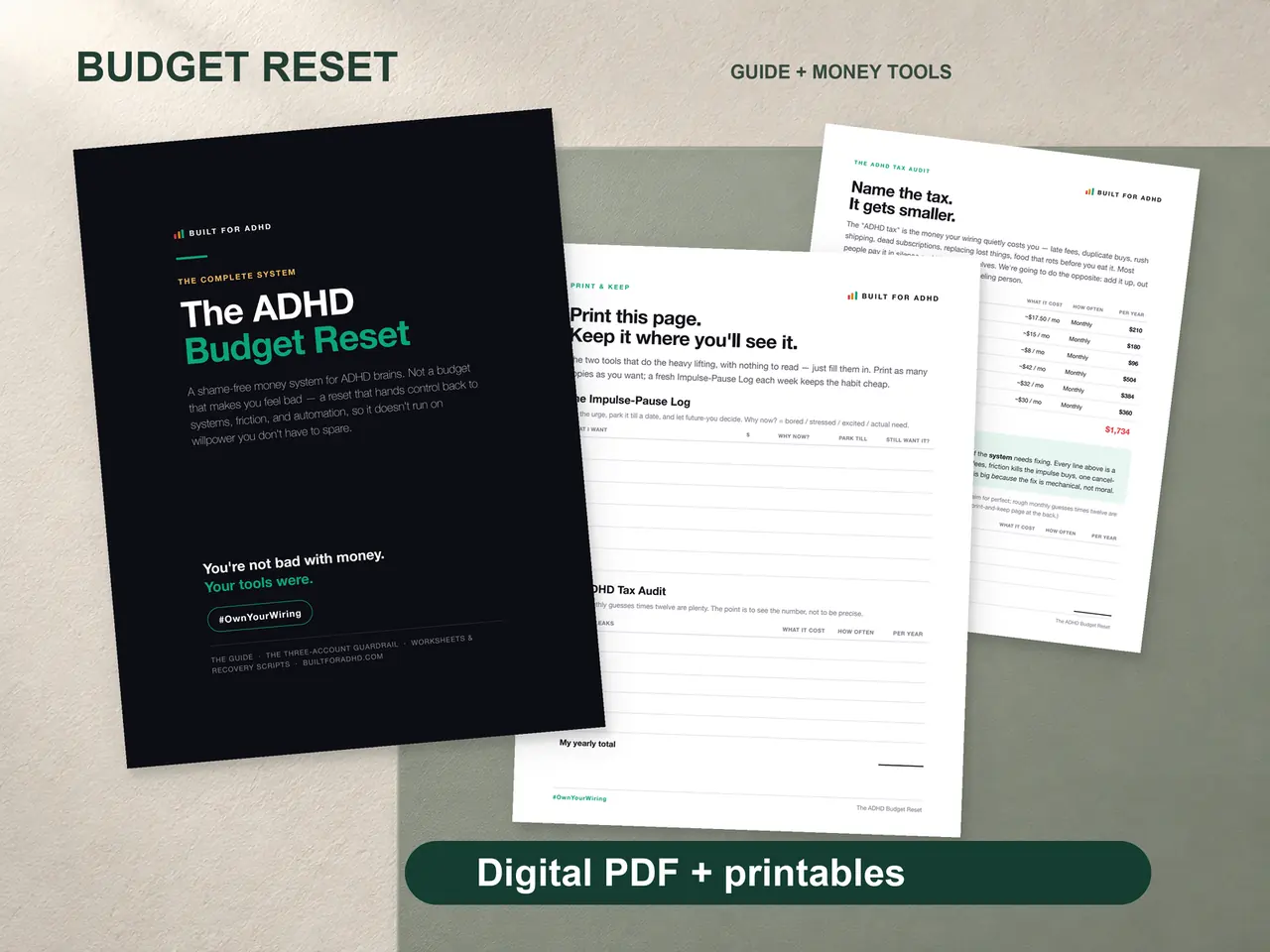
The Budget Reset handles the unique chaos of freelance income. The Money Dump page means you can write down a business lunch, a software purchase, and a personal coffee run in under 30 seconds — no categorization stress. The simple 3-category framework separates your spending into Needs, Wants, and ADHD Tax. The print-and-keep monthly pages show your financial health on a single sheet you can scan in a glance.
The ADHD Tax category is especially revealing for freelancers. When you can see exactly how much your ADHD cost you this month — late invoice penalties, forgotten subscription renewals, impulse equipment purchases — you get actionable data instead of vague guilt.
It’s an instant-download PDF — guide, workbook, and print-and-keep pages. No app, no spreadsheet, no subscription. At $7, it’s a business expense. Write it off. But more importantly, it’s the system that stops you from white-knuckling your way through another tax season with a shoebox full of receipts.
Your freelance career chose you for a reason. Give your finances the same structure your clients get.