In this article
A coworker replies to your carefully written message with “ok.”
That’s it. Two letters. And somewhere in the next ninety seconds you have concluded that they’re annoyed with you, that they’ve been annoyed with you, that the project is probably in trouble, and that you should reread everything you’ve ever sent them to find the moment it went wrong.
An hour later — nothing having changed except your nervous system — you learn they were driving and typed “ok” at a red light.
If that whole arc is familiar, and the intensity of it is something you’ve learned to hide because “you’re overreacting” made it worse, this is about rejection sensitive dysphoria — RSD — one of the most common and least discussed parts of living with ADHD. (It travels with the rest of the executive-function load, which is what the ADHD tools for adults guide exists for.)
First, the honest fine print
RSD isn’t an official diagnosis — you won’t find it in the DSM. It’s a term clinicians who work with ADHD popularized because so many of their patients described the same thing so consistently it needed a name. That’s worth knowing, not because the experience is any less real, but because you deserve accuracy from people writing about your brain. What follows is description, not diagnosis — and if rejection-pain is running your life, a clinician who knows ADHD is the right next step, not a blog post.
What the wave feels like from inside
People who don’t have it imagine “sensitivity to rejection” as feeling extra sad when criticized. That’s not it. The distinguishing features:
It’s instant and physical. Not a thought that spirals into a feeling — a wave that arrives before any thought at all. Chest, stomach, face heat. People describe it less like an emotion and more like a wound: something that happened to them.
It’s triggered by almost nothing. A delayed text reply. A meeting invite with no agenda. “Can we talk?” Being the one who wasn’t cc’d. The actual information content is near zero; the certainty of catastrophe is total.
Perceived rejection counts exactly as much as real rejection. This is the cruelest part. The nervous system doesn’t wait for confirmation. “They might be upset” and “they are upset” produce the same wave — so you can take the hit a dozen times a day without a single real rejection occurring.
It ends weirdly fast. Unlike depression’s flat gray, an RSD wave often crashes hard and then… passes. An hour or a day later you can see the “ok” text for what it was. Which adds a bonus layer of shame: why did I react like that?
And it steers your life quietly. The email you drafted and never sent. The invoice you didn’t chase. The idea you didn’t pitch. Not procrastination — avoidance of the wave. From the outside it looks like flaking. From the inside it’s armor.
Why it comes bundled with ADHD
The short, careful version: ADHD involves differences in how the brain regulates emotion, not just attention — feelings arrive at full intensity without the dimmer switch. Add a few decades of actually being corrected, interrupted, and told to try harder more often than your peers, and the alarm system gets both loud and well-trained. Wiring plus history. Neither of those is a character flaw.
What actually helps
No cure claims here — what follows is what reliably takes the wave from steering-wheel to passenger.
1. Name it in the moment. The single highest-value move. “This is RSD, not information.” You’re not arguing the feeling away — you’re filing it correctly. A wave that’s been named tends to pass through faster, and more importantly, it doesn’t get to make decisions while it’s passing.
2. Institute a reply-delay rule. Never respond to anything from inside the wave. Draft if you must — send nothing for an hour. The message your calm self sends is always better than the one your flooded self wrote, and the delay costs you nothing real.
3. Collect counter-evidence on paper. RSD’s whole trick is certainty without data. A running note of times the catastrophe didn’t happen — the “ok” that was a red light, the silence that was a busy week — gives future-you something to hold. Your memory won’t supply it during a wave; paper will.
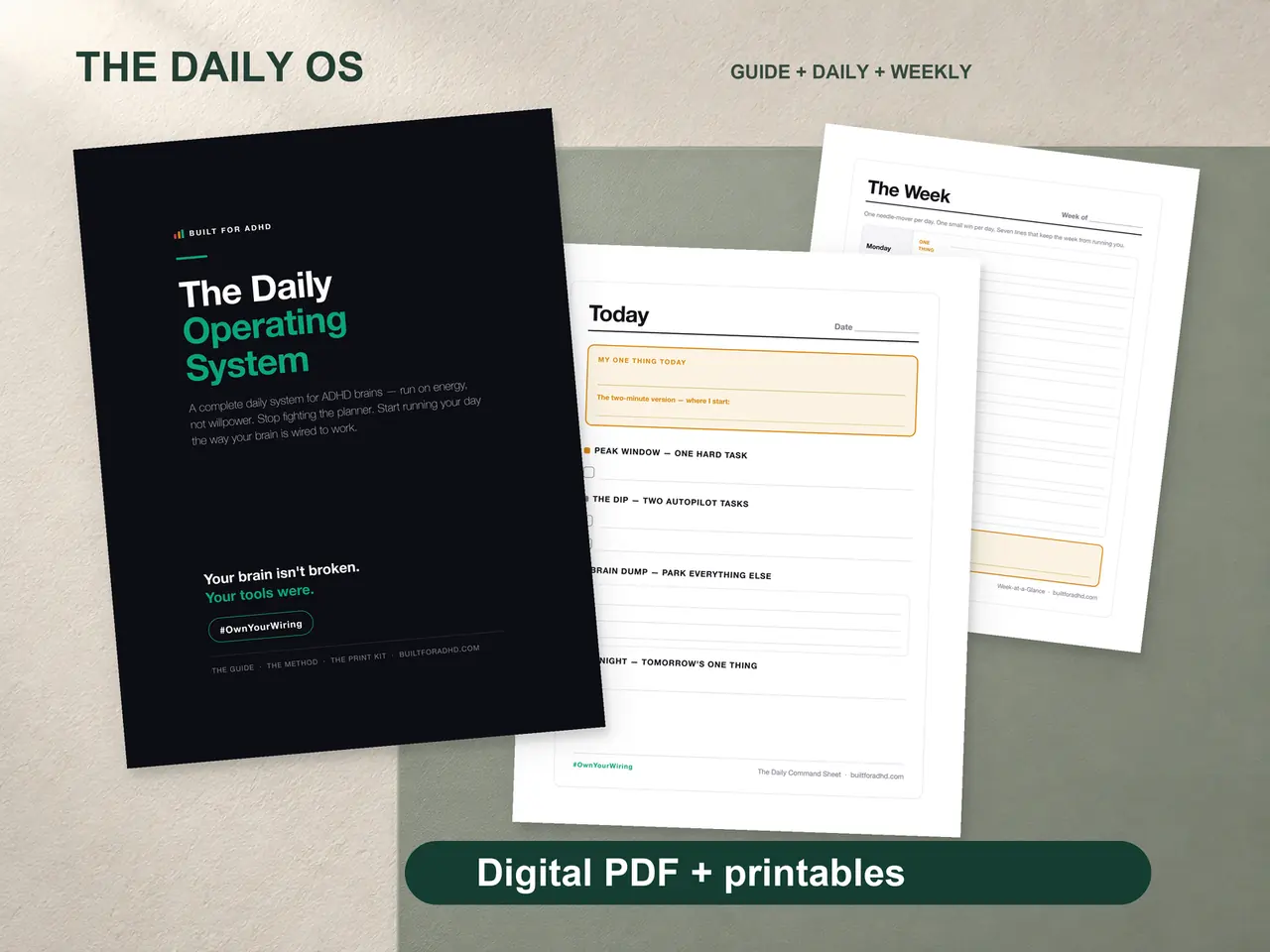
4. Shrink the ambiguity in your day. Every vague, hanging loop — the unsent email, the unclear task, the “I should reply to that” — is a surface RSD can land on. Getting the swirl out of your head and onto a page removes fuel. That’s the job of the free Brain Dump sheet, and it’s why the Daily Operating System is built around externalizing the day: fewer open loops, fewer places for the alarm to misfire. There’s a specific version of this for work relationships in managing clients with ADHD and RSD — the follow-up system for when avoidance has already cost you.
5. Tell one safe person the actual mechanics. Not “I’m sensitive” — the real thing: “When I get a flat reply I sometimes read it as anger. If I check in, I’m not accusing you — I’m recalibrating.” The right people adjust in about a day, and every “we’re fine” from someone who knows the code is worth ten from someone who doesn’t.
The part worth keeping
The same wiring that makes rejection land like a wave is why the people who have it tend to be the ones who notice the quiet person in the meeting, who reread messages before sending for how they’ll feel to receive, who care visibly and completely. The sensitivity isn’t the defect. The steering is. Move it to the passenger seat and what’s left is mostly a person who gives a damn.
Related tools
- ADHD tools for adults — the full toolkit, organized by what’s going wrong
- Managing clients with ADHD and RSD — the work-specific follow-up system
- The free ADHD Brain Dump sheet — close the open loops the wave feeds on
- ADHD Daily Operating System — $17, the externalize-everything daily system