In this article
By 4 PM you can run a meeting, debug a spreadsheet, or talk a friend through a crisis. What you cannot do is answer “what do you want for dinner?”
The question isn’t hard. That’s what makes it so humiliating. But you’ve been deciding all day — what to start with, what that email tone meant, whether to switch tasks, what to ignore, whether the thing you’re ignoring is allowed to be ignored — and somewhere around mid-afternoon the decision engine simply declines further work. Not tired. Closed.
That’s decision fatigue, and while everyone gets some version of it, ADHD brains get a double dose for a structural reason worth understanding — because the fix follows directly from it. (It’s the same fix that runs through all the ADHD tools for adults that actually stick: move the work out of your head.)
Why ADHD burns the budget faster
Deciding is executive function’s most expensive operation: hold the options, weigh them, pick, stop re-weighing after picking. Three ADHD mechanics multiply the cost:
You make more decisions than other people. That sounds backwards until you count. A brain with unreliable routines re-decides things other people automated years ago — when to leave, what order to shower-dress-eat, whether now is when to deal with the mail. A neurotypical morning runs on autopilot; an ADHD morning is forty tiny referendums before 9 AM.
Every option stays live. Weak filtering means all choices arrive at full volume — the menu’s 40 items, the inbox’s 12 possible next actions, all equally loud. More live options per decision, more cost per decision.
And the re-litigation tax. Deciding is supposed to close the question. An ADHD brain reopens it — was that the right call? should I switch back? — so single decisions bill you three or four times. Add the emotional surcharge when a choice might disappoint someone, and “pick a restaurant” costs what “negotiate a contract” should.
The result: by afternoon you’re not weak-willed. You’re over budget. Which is why “just decide faster” advice lands like “just spend less” — the spending already happened, invisibly, before lunch.
The fix: decide once, spend never
You can’t raise the budget. You can drastically cut the withdrawals — by converting repeating decisions into pre-decisions: choices made once, on a good day, that then run for free forever. The pattern, from smallest to biggest:
1. Kill the micro-referendums with defaults. A default breakfast. A default “leaving the house” sequence. A default answer to “coffee out or home?” Defaults feel boring until you notice what they actually are: decisions your 4 PM self no longer has to fund. Keep the freedom to override — a default is a starting answer, not a rule. (Dinner specifically has its own decided-in-advance system, and the Meal Planner turns it into a $7 printable.)
2. Sort by energy, not importance. “What should I do next?” is the day’s most-repeated decision, and importance-ranking is the most expensive way to answer it — every task re-weighed against every other, hourly. Energy-matching is cheaper: high-energy window, take a high-energy task; fried, take a fried-brain task. The question shrinks from “what matters most in the universe?” to “what fits what I’ve got right now?” — which an exhausted brain can still answer.
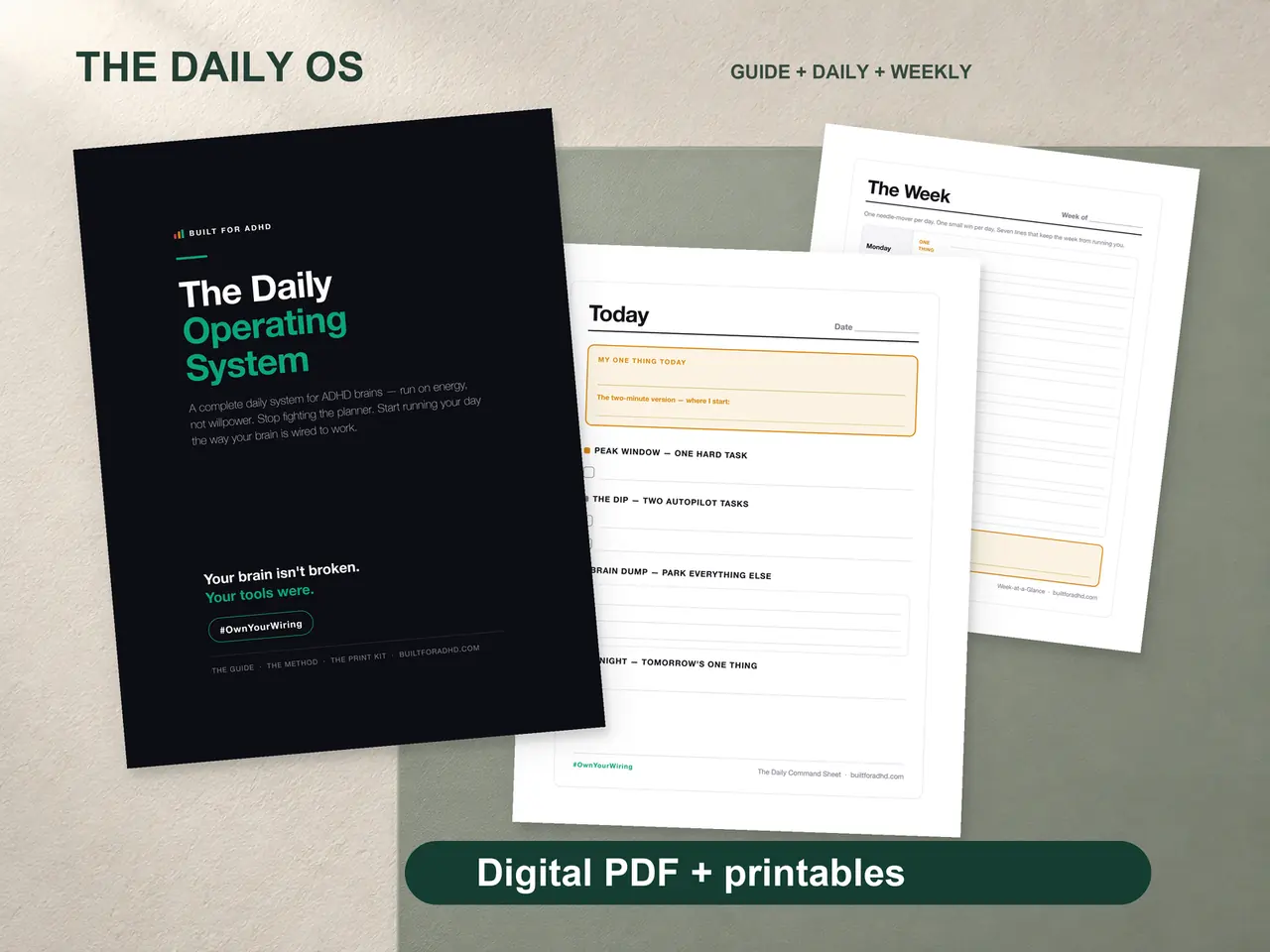
3. Run the day from a sheet, not from your head. The morning is the one moment you pre-decide the whole day: dump everything out, pick the three that count, sort the rest by energy, write it down where you can see it. After that, “what next?” stops being a decision — you look at the sheet. That single move deletes the day’s largest category of spending, and it’s the entire architecture of the ADHD Daily Operating System — $17, printable, with the energy-sort and the 3-max rule already designed in. (Want the decisions made for you on the truly fried days? The free Sorter does the triage in 30 seconds, and AI handles the sorting-and-breaking-down jobs surprisingly well.)
4. Protect the closed question. When re-litigation starts — was that the right pick? — the answer is a rule, not a feeling: “decided decisions run until the day ends.” You’re allowed to re-decide tomorrow. This sounds like a mind trick; it’s actually just refusing to pay the same bill twice.
What changes
Not the big things first — the texture. The 6 PM fridge-stare gets shorter. The “what next?” gap between tasks stops being a doorway to your phone. And the afternoon self who used to be out of budget turns out to still have some, because the morning stopped spending it forty referendums at a time.
Your decision engine was never broken. It was uninsured.
Related tools
- ADHD tools for adults — the full externalize-everything toolkit
- ADHD Daily Operating System — $17: the pre-decided day on one sheet
- What to eat when you can’t decide — dinner, pre-decided
- The free Brain Dump Sorter — triage done for you in 30 seconds